Explore an Era:

Eocene
54 - 38 million years ago
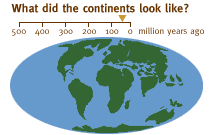
 High temperatures and rain, followed by cooling |
 |
 Antarctica and Australia separate |
|
 Forests get smaller and grassland savannas increase |
|
 Many mammals of increasing sizes |
|
 None |
What was the Delaware Bay like? |
 |
|
|
|
|
The Early Eocene is thought to have had the highest temperatures of the entire Cenozoic (about 30° C) and high precipitation in a world that was essentially ice free.
In the middle Eocene, Antarctica and Australia separate, creating a deep water passage bewteen the two and changing oceanic circulation patterns. This results in a global cooling towards the end of the epoch. The lower temperatures and increased seasonality cause the body size of mammals to increase, and create an increasingly open savanna-like vegetation, with a corresponding reduction in forests.