Explore an Era:

Cretaceous
146 - 65 million years ago
 Tropical climate |
 |
 High tectonic and volcanic activity |
|
 First flowering plants |
|
 Many dinosaurs |
|
 None |
|
 |
|
|
|
|
The Cretaceous Period had a climate that was radically different than any climate since that time. Temperatures on Earth were warmer with none below freezing, which meant no glaciers and less seasonal characteristics.
Flora and fauna thrived around the polar regions as well as the equator. The land was covered with forests and a large inland sea divided the United States in half and flooded about half of Arkansas.
Flowering plants called angiosperms evolved during the early Creataceous period and quickly took over most of the ecological niches. Some of these angiosperms included magnolias, laurels, sycamores and palms; these flowering plants supplied the plant-eating dinosuars with an abundant supply of food and gave rise to a huge boom in their population.
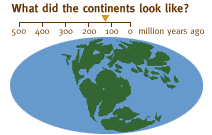
The breakup of the single world-continent, which began in the Jurassic, continued. This led to increased regional differences in floras and faunas between the northern and southern continents.
The end of the Cretaceous brought the extinction of many previously successful species, notably the dinosaurs and pterosaurs and about 50% of marine invertebrates. This extinction was probably caused by an asteroid impact or volcanic activity. This opens the stage for groups like mammals to come to the forefront.