Explore an Era:

Pliocene
5 - 1.8 million years ago
 Global cooling |
 |
 Ice at the poles begins to spread |
|
 Spread of grasslands and savannas |
|
 Increase in grazing animals |
|
 First hominids (australo- pithecines) |
 |
|
|
|
|
The Pliocene was a time of global cooling after the warmer Miocene. The cooling and drying of the global environment may have contributed to the enormous spread of grasslands and savannas during this time.
Populations of many grazing animals, such as zebras and horses, increase and spread over these grasslands. The first hominids (australopithecines) evolve.
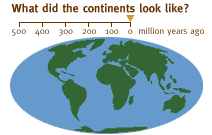
The Panamanian land-bridge between North and South America appears during the Pliocene, allowing migrations of plants and animals into new habitats. In the cooling environment, ice at the poles begins to spread, which will lead to the advance of glaciers and ice ages of the following Pleistocene.